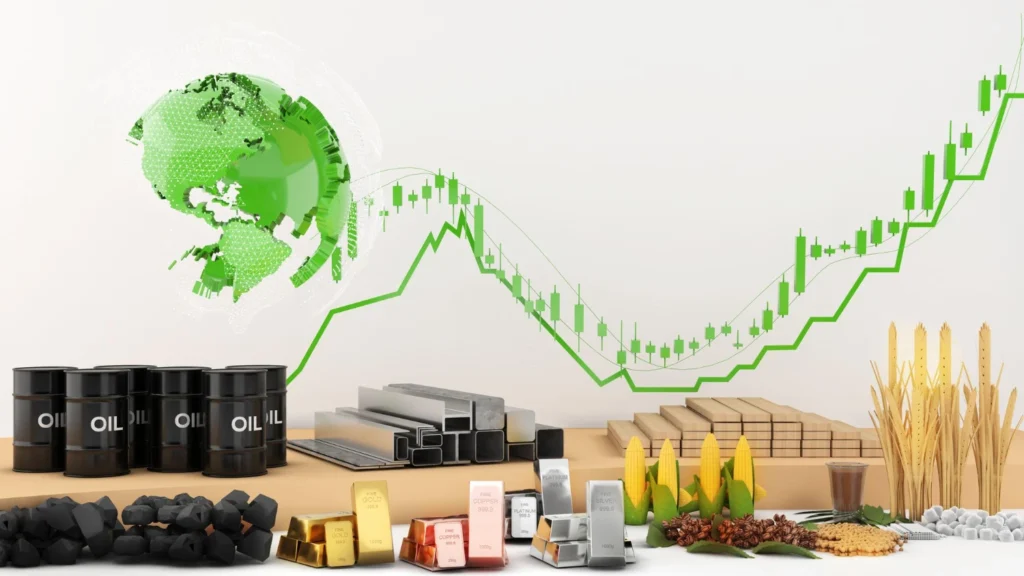
Gold. Crude Oil. Silver. Natural Gas. These are not everyday commodities; they are among the most actively traded assets in India’s financial markets. Thanks to platforms like MCX and NCDEX, even a retail trader in Kannur, Kerala can trade commodities from their phone.
But most beginners jump in without a plan, strategy, or education. The result? Losses, frustration, and the false conclusion that commodity trading doesn’t work. This guide will change that.
What Is the Commodity Market?
The commodity market is a financial marketplace where raw materials are bought and sold either physically or through futures contracts. Unlike stocks, you’re not buying a share of a company; you’re trading the underlying good itself.
Commodities fall into four main categories:
- Metals: Gold, Silver, Copper, Zinc
- Energy: Crude Oil, Natural Gas
- Agricultural: Cotton, Soybean, Chana, Cardamom
- Soft Commodities: Coffee, Sugar, Rubber
In India, trading happens on MCX (metals and energy) and NCDEX (agricultural goods), both regulated by SEBI.
Why Trade Commodities?
- Portfolio Diversification: Commodities often move independently of stocks.
- Inflation Hedge: Gold and crude oil tend to rise during inflationary periods.
- Profit in Both Directions: Use futures to profit whether prices rise or fall.
- Real-World Drivers: Commodities react to global trends such as currency, weather, and geopolitics, generating steady opportunities.
How the Commodity Market Works
Most commodity trading in India uses futures contracts to buy or sell a specific quantity of a commodity at a set price on a future date. If you believe crude oil will rise, you buy a futures contract today and sell it later at a higher price.
Key terms to know:
- Lot Size: Minimum trade quantity (e.g., 1 lot of Gold = 1 kg on MCX)
- Margin: A fraction of the contract value deposited to open a trade
- Expiry Date: The monthly date when a contract settles
- MTM (Mark-to-Market): Daily profit/loss settlement based on closing price
Commodity prices are driven by global supply and demand, USD/INR exchange rates, geopolitical events, seasonal weather, and government import/export policies.
Step-by-Step: How to Start Trading Commodities
Step 1: Educate Yourself First
Before putting real money in, learn the basics like chart reading, futures mechanics, and risk management. This step alone separates profitable traders from the rest.
Step 2: Choose One Commodity to Start
Don’t spread yourself thin. Gold and Silver are great starting points. They are liquid, less volatile, and well-covered by analysis. Avoid Crude Oil until you have experience.
Step 3: Open a Trading Account
Open an account with a SEBI-registered broker like Zerodha, Angel One, or Upstox. You’ll need your PAN card, Aadhaar, and bank details. The process is fully online and usually takes a few days.
Step 4: Understand Margin and Leverage
You only need a fraction of the contract value to trade. A Gold contract worth ₹6,00,000 may require just ₹40,000–₹60,000 in margin. Leverage amplifies both gains and losses, so always trade with a stop loss.
Step 5: Place and Review Your Trade
When you’re ready, here’s how to place a trade:
- Go to the commodity section (MCX/NCDEX)
- Select your commodity and contract month
- Choose Buy or Sell based on your analysis
- Enter lot size, set Stop Loss and Target
- Execute and monitor the trade
After exiting, log the trade in a journal. Review what worked, what didn’t, and adjust your approach.
Common Mistakes Beginners Make
- Trading without a plan: No setup, no target, no stop loss, just impulse.
- Over-leveraging: Too much margin = amplified losses. Start small.
- Following Telegram tips: Tips without context are a fast way to lose money. Learn to analyze yourself.
- Letting emotions decide: Fear and greed override logic every time. A system protects you from yourself.
Why Structured Learning Matters
Most self-taught traders lose real money before they figure things out. YouTube gives you fragments, not a complete, tested system. What’s missing is structure, mentorship, and accountability.
At We Simplify Trades, we trade live with you, teach through real charts, and support you for life through our WST Community, whether you join online from anywhere in India, or attend our offline trading course in Kannur.
Our 2-month course covers everything from candlestick patterns and supply-demand zones to risk management and trading psychology, all built around one goal: making you an independent, confident trader.
Frequently Asked Questions
Is commodity trading legal in India?
Yes. It is regulated by SEBI and conducted on registered exchanges like MCX and NCDEX.
How much money do I need to start?
Mini contracts can be traded with as little as ₹5,000–₹10,000. Standard Gold or Crude Oil contracts typically need ₹30,000–₹1,00,000 in margin. Start small and scale up.
What is the best commodity for beginners?
Gold and Silver are ideal. They are highly liquid and less volatile than Crude Oil, making them more forgiving while you’re learning.
Can I learn commodity trading online?
Absolutely. We Simplify Trades offers online and offline courses with live trading sessions, mentor guidance, and lifetime community support from anywhere in India.