Every year, thousands of people open a forex trading account with one dream: financial freedom. They’ve watched the reels, studied the charts, maybe even made a few small gains in their first week. Then, quietly and sometimes devastatingly, the losses begin to mount. Within months, many accounts are wiped clean.
This isn’t a coincidence or bad luck. It’s a pattern and the data proves it.
According to the European Securities and Markets Authority (ESMA), which legally mandates that regulated brokers disclose client performance data, between 74% and 89% of retail CFD and forex accounts lose money with average losses per client ranging from €1,600 to €29,000.
These aren’t warnings printed in fine print for legal cover. They are measured, mandatory disclosures based on real account data from tens of millions of traders worldwide.
The common thread running through nearly all of these losses?
Inexperience.
Not bad brokers. Not rigged markets. Not bad timing. Inexperience in strategy, in risk management, in psychology, and in understanding how the market actually works. Let’s break down exactly how it happens.
The Beginner’s Trap: Why Forex Feels Easy at First
The forex market is the largest and most liquid financial market in the world, with over $7.5 trillion traded daily. It’s open 24 hours a day, five days a week. You can open a live account with as little as ₹500. Leverage can amplify your buying power by 30x, 100x, or even more on offshore platforms.
To a beginner, this all sounds like an opportunity. And in the very early days, it can feel like you’ve cracked the code. A few green trades, a winning streak during a trending market and suddenly, the idea of trading for a living doesn’t seem far-fetched at all.
This is the beginner’s trap. Early success in forex is often the market’s cruellest trick.
The forex market does not punish inexperience immediately. It lets you get comfortable. It gives you enough wins to build confidence. Then, when you start trading larger positions, ignoring your rules, or chasing losses, that’s when inexperience reveals its true cost.
Social media makes this worse. Traders only post their wins. Flashy screenshots of massive returns, luxury cars, and “passive income” lifestyles are engineered to inspire and to deceive.
The full picture, including the blown accounts, the margin calls, the emotional spirals, rarely makes it to the highlights reel.
The 6 Ways Inexperience Destroys Trading Accounts
1. Trading Without a Real Strategy
The most common mistake inexperienced traders make is entering the market with no defined plan. They trade based on gut feeling, a tip from a friend, a YouTube video they watched the night before, or a “feeling” about a currency pair.
This is not trading. This is gambling with a prettier interface.
A genuine trading strategy includes specific entry criteria, defined exit points, rules for position sizing, and conditions under which you don’t trade. Without these guardrails, every trade becomes an emotional decision. And emotional decisions in the forex market are almost always expensive ones.
Lack of strategy is consistently cited alongside emotional and revenge trading as one of the leading documented causes of retail forex losses.
2. Ignoring Risk Management
You can have the best trading strategy in the world and still blow your account if your risk management is poor. Inexperienced traders often skip stop-losses entirely, either because they “don’t want to be stopped out” or because they’re convinced the trade will turn around.
It usually doesn’t.
Professional traders never risk more than 1–2% of their total capital on any single trade. Beginners routinely risk 10%, 20%, or their entire account balance on a single position. It only takes a handful of those trades to end a trading career before it truly begins.
Risk management isn’t a tool you use occasionally. It is the foundation everything else is built on.
3. The Leverage Illusion
Leverage is the feature that attracts most beginners to forex and the mechanism that destroys most of them. At 1:100 leverage, a single 1% adverse move in the market wipes out your entire capital. At 1:500 leverage, offered by many offshore brokers, the math becomes even more unforgiving.
Inexperienced traders treat leverage as free money. It is the opposite. It is a borrowed risk. Every unit of leverage you use is another unit of loss you are exposed to.
The ESMA’s landmark 2018 regulatory intervention which capped retail leverage specifically because of the systemic losses it was causing underscored just how destructive high leverage is in inexperienced hands.
Understanding leverage isn’t optional. It’s survival knowledge.
4. Emotional Trading: The Silent Account Killer
Fear and greed are not abstract concepts in forex trading. They show up in very specific, measurable ways:
- FOMO (Fear of Missing Out): Entering a trade late because a currency is already moving, then getting caught in a reversal
- Revenge trading: Doubling down after a loss to “win back” what you lost, usually resulting in even larger losses
- Panic closing: Exiting a valid trade too early because of short-term volatility, only to watch it hit your original target afterward
A trader can watch a ₹200 loss spiral into a ₹20,000 loss in under an hour through unchecked emotional decision-making. The market does not care about your P&L. It does not care about your rent, your ego, or your need to be right.
Successful traders build systems precisely so that emotions don’t get to make the decisions.
5. Ignoring the Economic Calendar
Technical analysis matters. But many inexperienced traders treat price action in complete isolation from the macroeconomic world driving it.
Every week, high-impact news events, central bank interest rate decisions, inflation data releases, employment figures, geopolitical developments can move currency pairs by hundreds of pips in seconds. A technically perfect setup on a clean chart can be obliterated the moment the Reserve Bank of India, the US Federal Reserve, or the European Central Bank makes a surprise announcement.
Experienced traders know the economic calendar as well as they know their charts. They plan around it. Beginners discover it the hard way after a news-driven spike destroys a position they were confident in.
6. Skipping the Learning Phase Entirely
Perhaps the most expensive mistake of all is the simplest: jumping into live trading with real money before you are ready.
Many beginners skip demo trading because it “doesn’t feel real.”
They skip backtesting because it’s “too boring.”
They skip journaling because they’d rather be trading.
And so they pay for every lesson with real capital — the most expensive school there is.
The forex market does not care how motivated you are. It does not reward effort without skill. The traders who survive and eventually thrive are those who treated the learning phase with the same seriousness as the trading phase and who found ways to compress that learning curve through structured education and mentorship.
What Experience Actually Gives You
There’s a reason the profitable minority (roughly 20–30% of traders) who consistently make money behave so differently from the majority. It’s not that they are smarter or luckier.
It’s that they’ve built something that beginners haven’t: a repeatable edge, backed by discipline.
Experience in trading means:
- Knowing your strategy well enough to trust it even during losing streaks
- Reading market context, not just candlestick patterns in isolation
- Identifying when not to trade often the most valuable skill of all
- Keeping losses small enough that your wins can compound over time
- Separating your identity from your trades, so losses don’t trigger destructive behaviour
None of this comes from watching videos alone. It comes from structured learning, consistent practice, honest self-review, and critically learning from people who have already made the mistakes you would otherwise have to make yourself.
This is where mentorship changes everything. Learning from experienced traders does not just save time. It saves capital. The mistakes you don’t make in your first year of trading are the single biggest contribution to your profitability in year two and beyond.
The Right Way to Start: Building a Real Foundation
If you’re reading this and recognising yourself in any of the mistakes above, that’s a good sign. Awareness is the first edge.
Here’s what a disciplined starting path looks like:
Step 1 — Learn before you risk.
Spend real time understanding price action, technical analysis, support and resistance, and how macroeconomic events move currency pairs. This is not optional groundwork. It is your foundation.
Step 2 — Demo trade seriously.
Treat your demo account like a live account. Same position sizes, same rules, same discipline. If you can’t be consistent on demo, you won’t be consistent live.
Even if you are comfortable trading on a demo account, using real money on a live account is where most people require courage. Always start with small amounts before investing heavily.
Step 3 — Define your risk rules before every trade.
Maximum 1–2% risk per trade. Always use a stop-loss. Non-negotiable.
Step 4 — Journal everything.
Journal every trade — entry, exit, reason, emotion, outcome. Your journal is your most honest mentor.
Step 5 — Find structured mentorship.
Not a YouTube playlist. A real, structured learning environment where experienced traders walk you through live market conditions, challenge your thinking, and hold you accountable.
The traders who shortcut these steps pay for it. The traders who follow them find that the market stops being a mystery and starts being a skill.
The Market Isn’t Rigged. You Just Need the Right Preparation.
The forex market is not designed to fail you. It is simply unforgiving of the unprepared. The statistics are sobering but they also carry a powerful implication: the traders who succeed are not rare geniuses. They are disciplined learners who took the time to get it right before the stakes got too high.
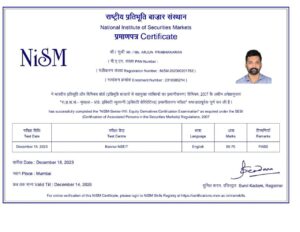
At WeSimplifyTrades, our entire approach is built around one belief: trading losses caused by inexperience are preventable. Our NISM-certified mentor, live trading floor, and hands-on structured courses exist because we’ve seen and lived what the difference between guided learning and self-taught trial-and-error looks like in real money terms.
If you’re serious about trading and not gambling, not hoping, but actually trading with a real edge, the best investment you can make right now isn’t in your next trade.
That’s exactly what we built WeSimplifyTrades for. Through our online and offline trading courses in Kannur, we teach students how to trade in the simplest method possible.
👉 Book a free demo class at WeSimplifyTrades and learn what professional trading actually looks like from mentors who’ve been doing it for 8+ years.